
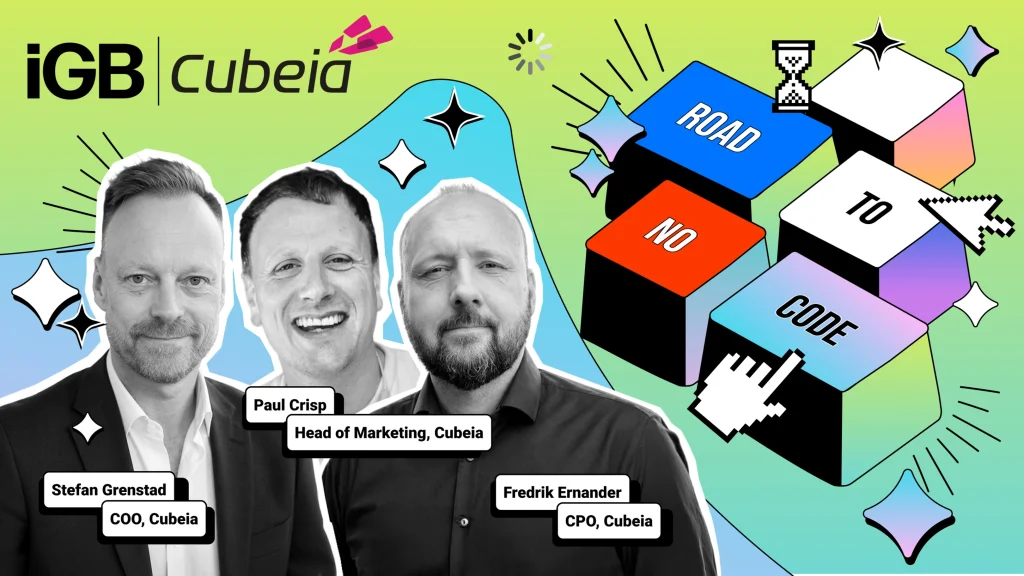
Part two of our AI-assisted code story is live on iGaming Business. A hundred days into building with Claude, our COO Stefan Grenstad talks through what changed once the initial excitement settled and the team had to adapt its way of working to keep pace.
Quick facts
|
Series |
Cubeia’s road to AI-assisted code |
|
This instalment |
Part two: How is the development team adapting? |
|
Published by |
iGaming Business |
|
Speaker |
Stefan Grenstad, COO |
|
Milestone |
100 days into AI-assisted development |
Where the story started
In chapter one, Stefan explained how the shift began: a look at Jira data showed that two or three developers were suddenly delivering close to 60% of results with AI assistance. That discovery, combined with CPO Fredrik Ernander’s push for faster prototyping and shorter feedback loops, set Cubeia on a path to build all new features and releases with AI-assisted code.
What’s changed since
Before AI-assisted development, Cubeia shipped 4-6 releases a month and closed around 50 tickets. By June, that had grown to 10 releases and 96 tickets closed, roughly double the output.
Growth like that doesn’t come from the tooling alone. In part two, Stefan is candid about what it actually took to get there.
Adapting as a team
Working with AI-assisted code means juggling more at once, and not everyone adapts to parallel work at the same pace. Some developers took to it immediately. Others needed support finding what Stefan calls “the perfect amount” of concurrent tasks, and tech leads have stepped in to mentor people through the shift.
QA has changed too. Instead of testing after the fact, it’s now built into development as it happens, so quality keeps up with speed rather than trailing behind it.
Even scepticism has shifted. One senior developer who was wary of losing control over faster releases now uses Claude as his sounding board, and has become one of the strongest advocates for the new way of working on the team.
Stefan’s view is straightforward: this is the future. But getting the benefit of it takes a team willing to change how it works, not just a good model.
Read the full story
Part two covers the numbers, the growing pains, and how Cubeia is restructuring QA to match the new pace, in Stefan’s own words.
Read part two on iGaming Business: https://igamingbusiness.com/tech-innovation/cubeias-road-to-ai-assisted-code-part-two-how-is-the-development-team-adapting/
Catch up on part one: https://igamingbusiness.com/tech-innovation/cubeias-road-to-ai-assisted-code-chapter-one/
Frequently asked questions
What is Cubeia’s “road to AI-assisted code” series about?
It’s an ongoing series with iGaming Business following Cubeia’s shift to building new features and releases with AI-assisted code, using Claude as the primary tool.
What happened in part one of the story?
Part one covered how the initiative started. COO Stefan Grenstad found through Jira data that a small group of developers were already delivering close to 60% of results with AI assistance, which led Cubeia to commit to AI-assisted development across the team.
What’s new in part two?
Part two looks at 100 days into the transition: how output has changed, how the development team is adapting to working in parallel, and how QA is being restructured to keep pace with faster releases.
How has Cubeia’s release output changed since adopting AI-assisted development?
Releases have grown from 4-6 a month to 10, with tickets closed climbing from around 50 to 96 in June.
Who is Stefan Grenstad?
Stefan Grenstad is Cubeia’s Chief Operating Officer and the driving force behind the company’s move to AI-assisted development.
Where can I read the full story?
Part two is published on iGaming Business, linked above. Part one, covering how the initiative began, is linked above as well.